In the first week when playing the card trick at the beginning
of class we were able to figure out the math trick within the first few
attempts. It felt good that we did not have to try as hard and were successful when
finding the trick in the card game. This
week however there was a different emotion I felt, “frustrated!” No matter how
many times we tried we could not figure out the trick. There were moments, even
when an explanation was provided, I still felt, “lost.” Reflecting back on the
process I learned a few lessons from that experience. First there are going to
be students who may have similar emotions, and as an educator, I must have ways
to help students cope with such emotions ready in my teacher toolbox. Another thing
I learned was in that moment, I myself was undergoing a ‘fixed-mindset’. I realized
that I must change my own way of thinking first, so that students don’t catch me
in my moments of frustration when I face a challenge. Practicing a growth
mindset from now will mean that I can effectively model to students how they
can be successful when overcoming a challenge.
As educators we know how important the growth mindset is and
there are a great number of resources available to teachers in order to
implement it in our own classrooms. When looking resources on growth mindset, I
came across the following website:
This resource made me aware of that fact that teachers should
be sensitive to the phrases they use in their class such as simply telling a
student to, “try harder,” can be a problem. Instead students should be taught
why they need to continually put in the effort. Providing students with
evidence about the plasticity of the brain can help them see the importance of
continually putting in the effort. This website has embedded within it a lesson
plan which highlights the following as it objectives for teaching students
about the growth mindset:
- “Intelligence can be developed”
- “The brain is malleable”
- “Doing challenging work is the best way to make the brain stronger and smarter”
 |
| Retrieved from Google Images: http://bit.ly/2xIVU8P |
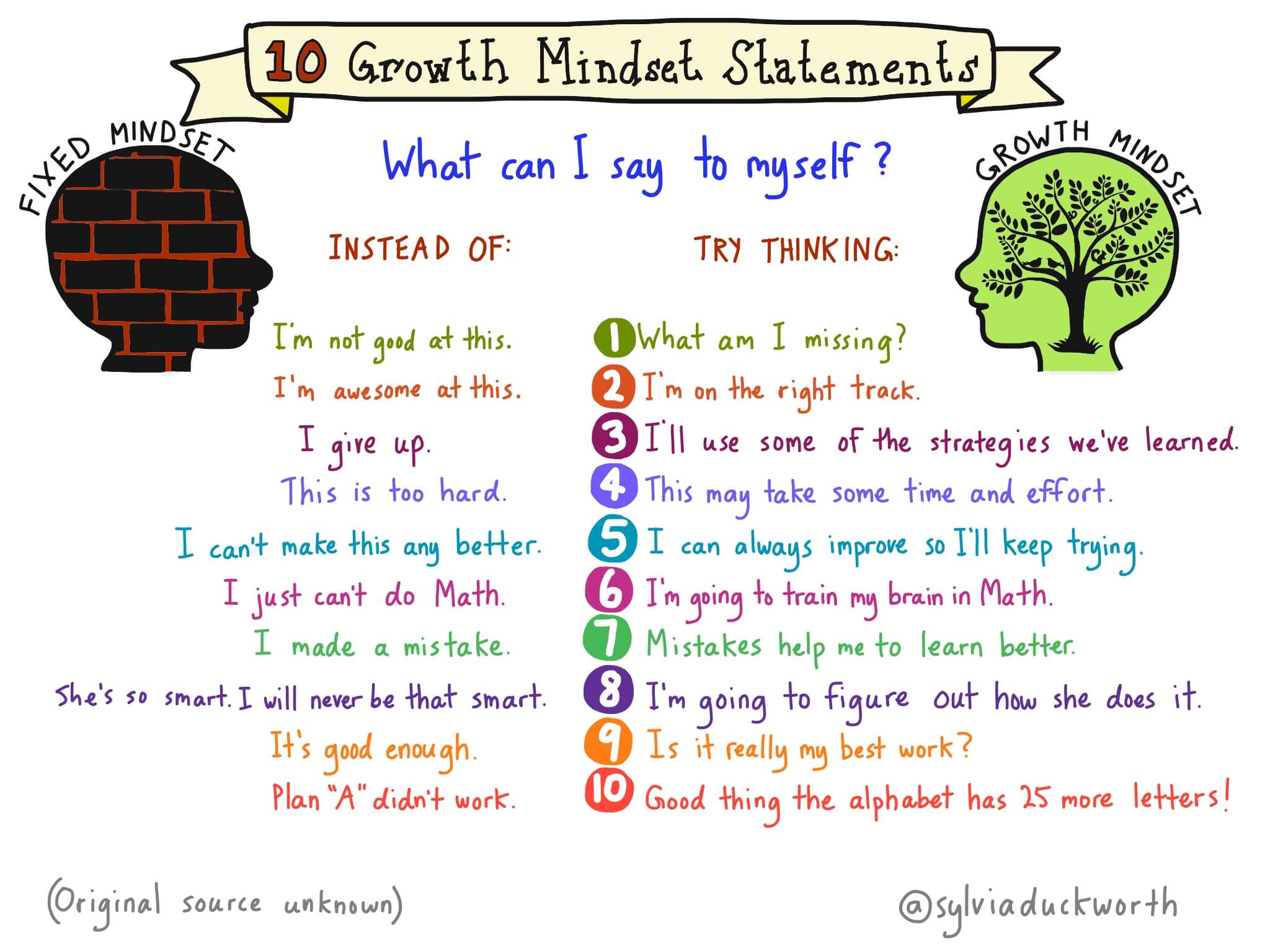
We as teachers should be mindful of the phrases we use in
class to ensure that our students practice a growth mindset. Not only teachers,
but students should also be aware of the different phrases they can subconsciously
go through in their mind when faced with a challenge that inhibits them trying
to solve the problem. Here is an image that can be projected to teach your
students the different phrases to use.
 |
| Retrieved from Google Images: http://bit.ly/2w26wew |
Thanks for reading this week's blog post, and I look forward to reading your comments!
- Nuha

Hi Nuha,
ReplyDeleteI absolutely agree that as teachers, we need to be careful of the language we use because it can be damaging to a student's frame of mind, even if they don't realize it right away. One of the things that struck me about reading your post was that having a growth mindset is important because students who are told certain things are are going to want to keep those words or phrases in mind and impact their learning, both positively and negatively. I really like the growth mindset statement image you posted. I think that this is a great poster that could be used, not only for math but for every subject as well. Students need to keep positive thoughts when it comes to something they struggle or don't understand.
Great post!
Kristy